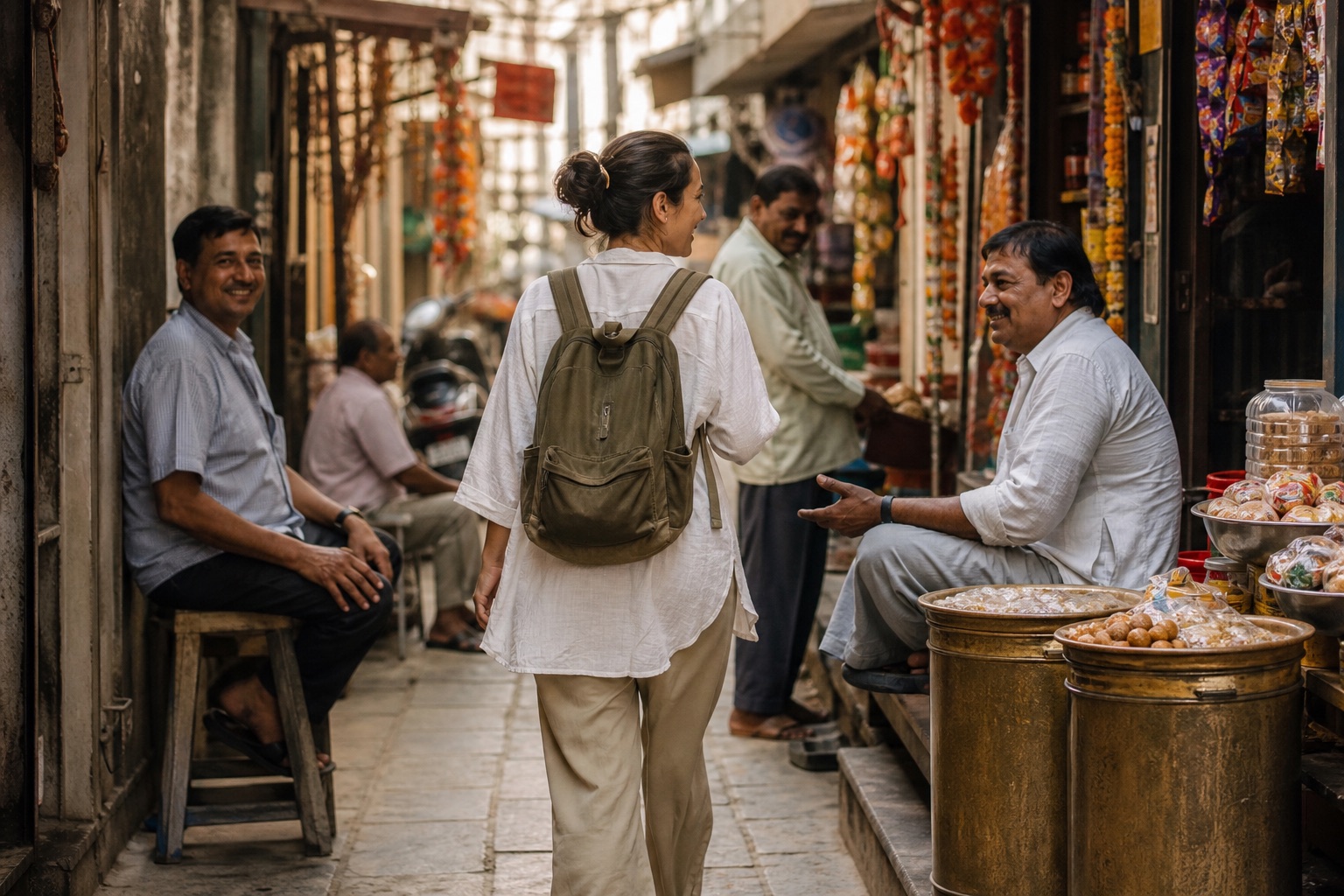
Use slow travel to reduce transit stress, understand neighbourhoods, create repeat connections and spend more responsibly.
1 min readReviewed 11 August 2026
Reduce transition fatigue
Every move requires packing, checkout, transport, navigation and a new mental map. Fewer moves protect energy for actual experiences and make delays less damaging.
Learn daily geography
After several days you know where to eat, which routes feel comfortable and when neighbourhoods change character. This practical knowledge increases confidence more than collecting landmarks.
Create repeat connection
Friendship often comes from seeing people again. Returning to a café, class or walking route creates natural recognition without forcing introductions.
Spend with more context
Longer stays make it easier to choose independent businesses, understand fair prices and avoid convenience purchases. Your spending can become more locally distributed.
Keep structure flexible
Slow travel does not mean doing nothing. Choose a few anchor plans, maintain basic routines and leave open time for weather, rest and local recommendations.
Slow travelCommunityPlanningResponsible travel
Find your Circle.
Join waitlist for small, destination-based communities built for solo travellers.